
Beyond Back Rent: The Alarming Practice of Shifting Legal Fees to Vulnerable Tenants
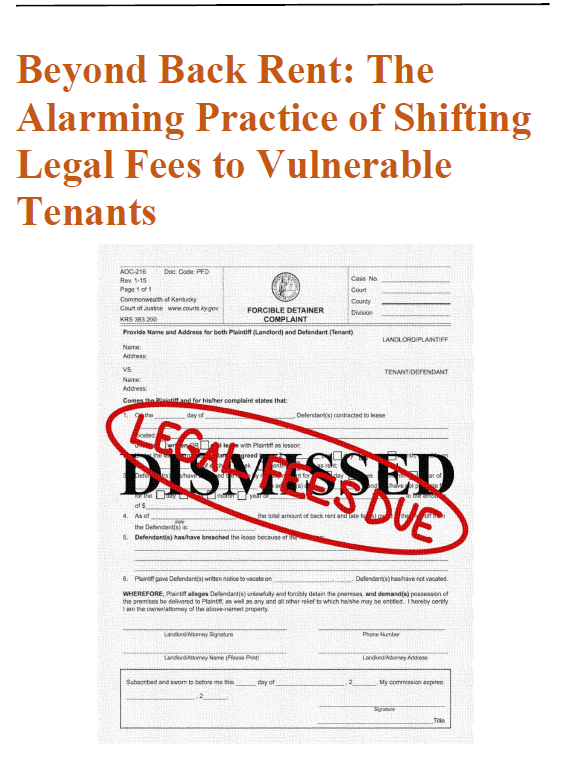
Click the button below to read the full report to learn more about the problem, its impact on families, and what Legal Aid is doing to protect tenants’ rights.
Eviction court is often framed as a simple dispute over unpaid rent. But for many low-income tenants in Louisville and Jefferson County, the real crisis goes far beyond back rent. A new Legal Aid Society report, Beyond Back Rent: The Alarming Practice of Shifting Legal Fees to Vulnerable Tenants, by Senior Attorney Rebekah Cotton, exposes how the routine addition of landlord attorney fees in eviction cases deepens financial hardship, accelerates displacement, and undermines local housing stability efforts.
Under Kentucky’s Uniform Residential Landlord and Tenant Act (URLTA), tenants in Jefferson County cannot lawfully be required to pay a landlord’s attorney fees through a lease provision. Yet Legal Aid attorneys and advocates continue to see these fees demanded at nearly every stage of the eviction process - embedded in lease agreements, included in eviction notices before a case is even filed, and folded into “standard agreements” that tenants must accept to avoid an eviction judgment. For households already struggling to keep up with rent, these added costs often make it impossible to resolve a case and remain housed.
The report documents how fee-shifting practices disproportionately harm low-income tenants and weaken Louisville’s Right to Counsel ordinance by discouraging tenants from asserting their legal rights. When contesting an unlawful eviction risks hundreds of dollars in additional debt, access to justice becomes a financial gamble rather than a protection.
Beyond legal analysis, the report highlights the human impact of these practices. One featured story follows a new father who faced eviction just after the birth of his child—driven in part by unlawful attorney fees demanded by his landlord. With Legal Aid’s intervention, those fees were removed, the eviction was dismissed, and the family was given time and stability during a critical moment in their lives.
Drawing on data from Jefferson County eviction court, firsthand experience from Legal Aid staff and volunteers, and a perspective from a landlord-side attorney, the report makes clear that shifting attorney fees to tenants does not promote accountability or housing stability. Instead, it fuels a cycle of debt, displacement, and homelessness - outcomes that local laws and diversion programs were designed to prevent.
Beyond Back Rent calls for greater awareness, stronger enforcement of existing tenant protections, and collective responsibility among landlords, attorneys, courts, and the community to ensure eviction court serves its intended purpose: resolving possession disputes fairly, not compounding poverty.